






Key Takeaways
Hormones reshape your skin across the menstrual cycle — oestrogen supports collagen and hydration, while progesterone influences sebum production, which is why skin can look and feel different week to week. What isn't supported is the idea that this requires a different formulation every few days: dermatologists warn that constant switching disrupts the consistency your skin's actives need to work. A stable ritual, adjusted with intention rather than replaced on a schedule, serves skin better than a rotating trend.
Search "cycle-syncing skincare" and you'll find no shortage of colour-coded calendars, four-phase shopping lists, and the promise that syncing your ritual to your hormones is the missing piece of your skin's puzzle. It's a neat idea, dressed convincingly in the language of science. But an idea being appealing doesn't make it accurate, and an idea being partly true doesn't make every claim built on top of it sound.
Hormones do influence skin function across the menstrual cycle—that much is well established in dermatological literature. What's far less certain is how much that influence should dictate which formulation you reach for on any given day. This article aim is to draw that distinction clearly: the biology that's genuinely proven, and the extrapolation that has outpaced it, so that whatever ritual guides your skin, it's guided by evidence, not a trend.
What Is Cycle-Syncing Skincare?
Cycle-syncing skincare is the practice of adjusting your skincare ritual, often quite dramatically, according to the four phases of the menstrual cycle: menstrual, follicular, ovulatory, and luteal. The idea borrows its logic from the broader cycle-syncing movement in fitness and nutrition, which proposes that training, eating, and now skincare should flex around hormonal fluctuation rather than follow a fixed weekly pattern.
In its skincare form, the trend typically recommends a different formulation focus for each phase: richer, more nourishing textures during menstruation, lighter and more resilient formulations through the follicular phase, brightening actives around ovulation, and oil-controlling or blemish-targeted products through the luteal phase. Cycle-tracking apps have made the framework easy to follow, prompting many women to treat their skincare shelf the way they might treat a wardrobe – a different outfit for every stage of the month.
The premise is not baseless. Oestrogen and progesterone do fluctuate across the cycle, and skin really does respond to those shifts. With vague understanding, adjusting skincare across menstrual cycle phases makes intuitive sense, but the question we’re setting out to answer here is whether that intuition justifies the trending practice built around it.
How Hormones Affect Your Skin, Phase by Phase
This is the part of the cycle-syncing behaviour that holds up: menstrual cycle skin genuinely does shift with hormonal fluctuation, in ways that are well documented. Oestrogen plays a well-established role in skin health, supporting collagen density, skin thickness, and hydration (Verdier-Sévrain, Bonté & Gilchrest, Experimental Dermatology, 2006). The oestrogen-collagen link is one of the more consistent findings in this area of dermatological research. As oestrogen rises and falls across the month, skin's hydration and resilience shift with it. Progesterone works differently: it's linked to increased sebum production, which is one reason breakouts cluster in the days before menstruation rather than appearing evenly throughout the month (Zouboulis, Hormone and Metabolic Research, 2007).
Where the Trend Gets Trickier: What Dermatologists Say
Does cycle-syncing skincare actually work, or is cycle-syncing skincare even real? The honest answer is more nuanced than most content on the topic allows: the biology behind it is real, but the practice of switching formulations every few days is not supported by dermatological consensus, and even may work against you.
The gap between the biology and the practice comes down to basic pharmacology. Active ingredients such as hydroxy acids, peptides, and retinol typically need weeks of consistent use before their benefits become visible—a principle well established across dermatological literature, regardless of formulation. Switching products on a four-phase schedule interrupts that timeline before most actives have had the chance to work, meaning a rotating ritual can leave skin no further ahead than one that never changed at all.
There is also meaningful individual variation that a rigid calendar doesn't account for. Some women notice no discernible skin change across ovulation; others experience it distinctly. A framework built for the average cycle doesn't necessarily describe any one person's actual skin. This doesn't mean hormonal fluctuation isn't real. It means a one-size-fits-all four-phase protocol is a much bigger claim than the underlying biology supports.
Who This Doesn't Apply To: Birth Control, Irregular Cycles and PCOS
Can you cycle-sync your skincare while on birth control? In practice, not meaningfully. Hormonal contraceptives work by flattening the natural rise and fall of oestrogen and progesterone across the month (Arowojolu, Gallo, Lopez & Grimes, Cochrane Database of Systematic Reviews, 2012), which is part of why they're often prescribed for hormonal acne in the first place. Without that underlying fluctuation, a four-phase skincare calendar has little biological fluctuation left to sync to.
The same honesty is owed to anyone whose cycle doesn't run on a tidy 28-day schedule. Irregular cycles, and conditions such as polycystic ovary syndrome (PCOS), involve hormonal patterns that don't map cleanly onto the standard menstrual-follicular-ovulatory-luteal model (Androgen Excess and PCOS Committee, Journal of the Endocrine Society, 2022). For this meaningful share of women, a rigid phase-based protocol isn't just unhelpful, it's built on an assumption that doesn't hold. A skincare ritual that stays sound regardless of cycle regularity will always serve skin better than one that depends on a calendar it can't reliably follow.
Building a Ritual That Flexes Without Overcomplicating It
If constant product-switching isn't the answer, what is? The evidence points toward a different, more consistent approach to hormonal skincare: one considered ritual, chosen for how your skin behaves overall, with only modest adjustments where hormonal fluctuation genuinely warrants them—not a wardrobe of formulations swapped on a schedule. This is arguably the most useful reframe for anyone searching for the best skincare for hormonal skin: the answer isn't a new formulation for every phase, but one that performs consistently through all of them.
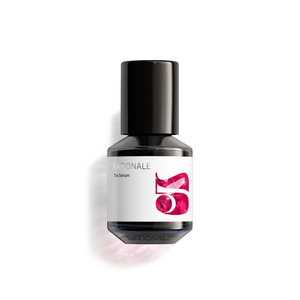
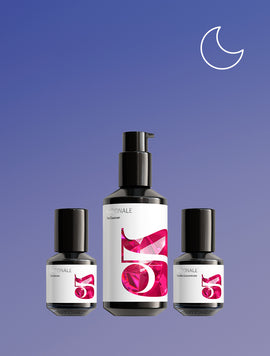
Effective skincare for hormonal breakouts has less to do with which phase of the month it is, and more to do with consistency. Congestion-prone skin, whatever is driving it in any given week, responds best to gentle, consistent care rather than dramatic swings between harsh treatment and complete rest. This is the thinking behind the #5 The Refining Serum, formulated with a proprietary complex of Hydroxy Acids. Rather than being reserved for the days when congestion is most visible, it's designed to be used steadily to support even tone and texture throughout the month, so skin is better prepared for the luteal phase rather than reacting to it after the fact. Paired with #5 The Refining Cleanser from the same collection, it forms a simple two-step foundation that doesn't need to change every fortnight.
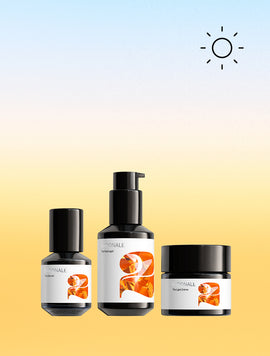
The one adjustment worth making sits in the menstrual and late luteal phases, when oestrogen is at its lowest and skin often presents as drier or more reactive. Here, a richer barrier layer, such as #4 The Nourishing Crème, formulated with multiple forms of ceramides and peptides, can be introduced as needed, then set aside again once skin settles. This is the ‘modest adjustment’ the evidence better supports: adding a layer of comfort when barrier function is under more pressure, not replacing an entire ritual four times a month.
For clients wanting a better understanding on where their own skin sits, a Virtual Consultation delivered online, or a Signature Consultation experience within a Flagship, will offer a deeper dive in your unique needs and concerns, informed by expert advice and guidance from a RATIONALE Skin Therapist.
The Research Behind Hormones and Skin
The case for hormonal influence on skin is well supported in the dermatological literature. Oestrogen's role in maintaining collagen density and skin hydration has been documented for decades (Verdier-Sévrain et al., 2006), and broader reviews of sex hormones in skin confirm that both oestrogen and progesterone act directly on sebaceous glands, collagen synthesis, and barrier function (Zouboulis, 2007). The link between hormonal fluctuation and acne is similarly well established (Lucky, American Journal of Medicine, 1995), and it remains an active area of research: a 2024 review of adult female acne reaffirmed the menstrual cycle's role in breakout patterns while emphasising how much individual variation exists within that pattern.
What this body of research supports is the mechanism—that hormones affect skin. It does not extend to supporting a specific four-phase product-rotation protocol, which has not itself been clinically tested as a distinct practice. This is precisely why RATIONALE's own approach favours proven, steadily incorporated formulations over trend-driven rotation.
Frequently Asked Questions
Partly. The biology behind it (that oestrogen and progesterone fluctuate across the cycle and influence skin hydration, collagen support, and sebum production) is well established. The practice of switching skincare formulations every few days to match those phases is not itself supported by clinical evidence, and works against a basic principle of skincare: most active ingredients need weeks of consistent use before their benefits show.
Progesterone rises during the luteal phase, the two weeks before menstruation, and is linked to increased sebum production. This makes congestion and breakouts more likely in the days leading up to your period, particularly along the jawline and chin, than at other points in the cycle. A consistent ritual, rather than a product introduced only when breakouts appear, tends to manage this pattern more effectively over time.
Not as meaningfully as one might hope. Hormonal contraceptives flatten the natural rise and fall of oestrogen and progesterone across the month, which is part of why they're often prescribed for hormonal acne. Without that underlying fluctuation, there is little hormonal variation left for a phase-based skincare calendar to respond to.
Not as it's typically practised. The idea that hormones affect skin is well supported; the specific four-phase product-rotation protocol has not itself been clinically tested as a distinct practice. Active ingredients need weeks of consistent use to show results, and a rotation schedule interrupts that timeline before it can happen.
In general terms: skin can feel drier and more reactive during menstruation, stronger and more hydrated through the follicular phase, most luminous around ovulation, and more congestion-prone through the luteal phase as progesterone rises. This is roughly the pattern that skincare built around menstrual cycle phases assumes, and it holds up reasonably well as a general description. Individual experience varies considerably, though, and cycles that are irregular or affected by conditions such as PCOS may not follow this pattern at all.
Hormonal acne tends to cluster around the jawline and chin, follows a cyclical pattern tied to the luteal phase, and often persists into adulthood beyond the teenage years typically associated with acne. The underlying mechanism (increased sebum production driven by hormonal fluctuation) is well documented in dermatological literature. Even so, the most effective hormonal acne treatment still depends on the individual and, where appropriate, a dermatologist's guidance.
Choose Evidence Over a Trend
Hormones shape your skin in ways that are genuinely worth understanding. What they don't require is a wardrobe of formulations reassembled every few days. A ritual built on consistency – with room for the occasional, thoughtful adjustment when your skin is under more pressure – will always outperform one that changes faster than any active ingredient can work.
If you're ready to build your ritual, take our Skin Questionnaire for a personalised starting point.
References
- Verdier-Sévrain S, Bonté F, Gilchrest B. "Biology of estrogens in skin: implications for skin aging." Exp Dermatol. 2006;15(2):83-94. PMID: 16433679.
- Zouboulis CC. "Sexual hormones in human skin." Horm Metab Res. 2007;39(2):85-95. PMID: 17326004.
- Lucky AW. "Hormonal correlates of acne and hirsutism." Am J Med. 1995;98(1A):89S-94S.
- Arowojolu AO, Gallo MF, Lopez LM, Grimes DA. "Combined oral contraceptive pills for treatment of acne." Cochrane Database Syst Rev. 2012;(7):CD004425. PMID: 22786490.
- "Female Adult Acne and Androgen Excess: A Report From the Multidisciplinary Androgen Excess and PCOS Committee." J Endocr Soc. 2022;6(3):bvac003.
- "Unveiling the Nuances of Adult Female Acne: A Comprehensive Exploration of Epidemiology, Treatment Modalities, Dermocosmetics, and the Menopausal Influence." PMC11034510, 2024.